
Research · Agrimix Flux
The science behind
Agrimix Flux.
Explore the field measurements, modelling and peer-reviewed research helping producers understand pasture and soil carbon change.
Request a demo
See what Agrimix Flux could tell you about your property.
Start with the question
Better pastures. A clearer picture of carbon.
Since 2008, Agrimix has worked with researchers and producers to turn pasture science into practical decisions. The question behind Agrimix Flux was a natural next step: how can we quantify what pasture improvement and grazing management are doing to soil carbon?
Working with Queensland University of Technology (QUT), Meat & Livestock Australia (MLA) and grazing businesses, Agrimix helped develop a Measure, Model, Verify approach built around DayCent-CABBI, a process-based ecosystem model.
This page brings together the model research and related pasture studies for producers, advisers and partners who want to examine the evidence.
MLA webinar: modelling soil carbon in grazing lands with Agrimix. An introduction to the research program and the approach behind Flux.
How the science works
Measure. Model. Verify.
The strength of the approach comes from connecting what we measure in the field with a model of the processes driving change.

Measure
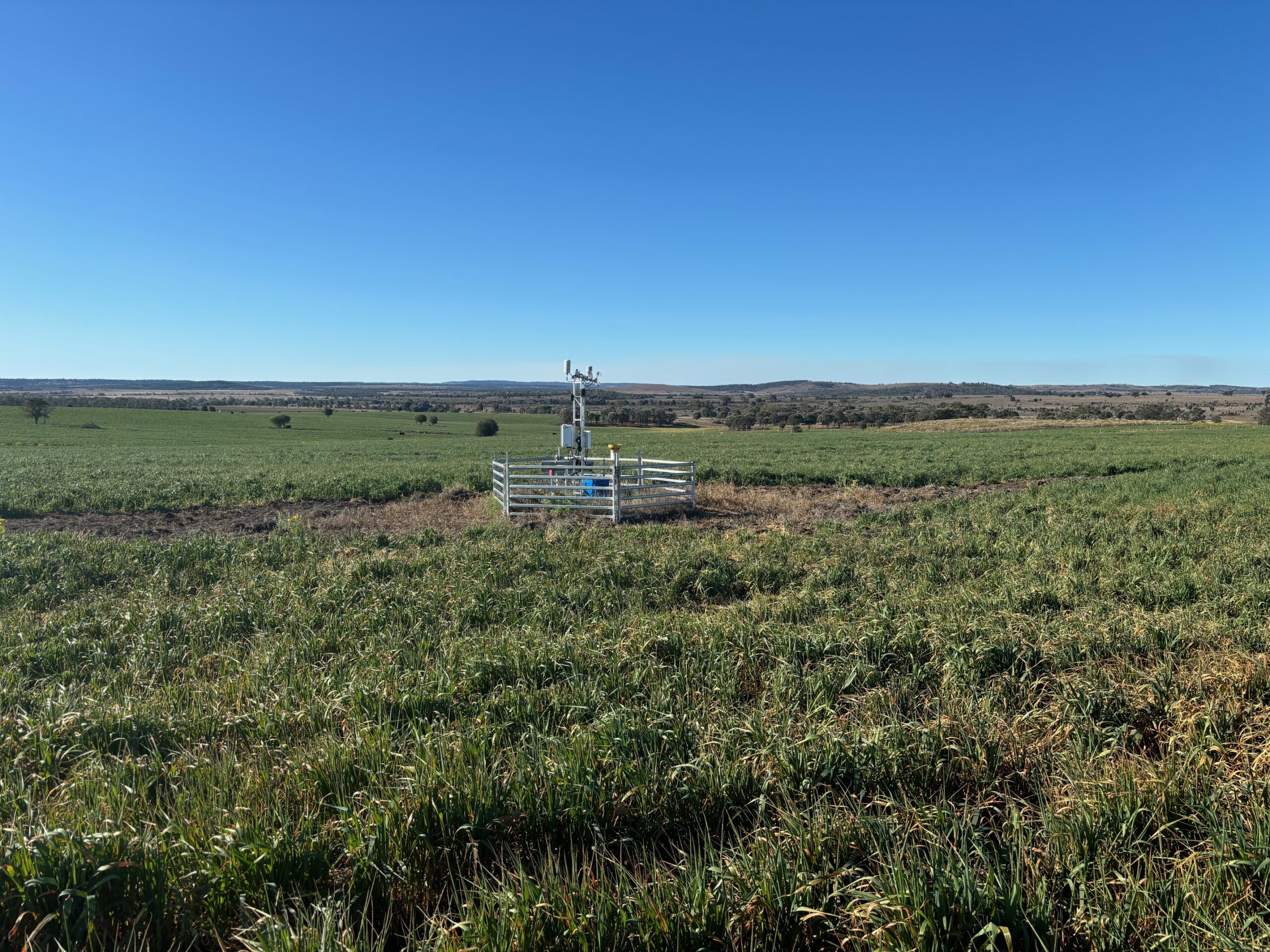
Flux towers continuously measure carbon dioxide exchange between the grazing ecosystem and the atmosphere. These observations, together with long-term soil and pasture datasets, help calibrate and test the model.

Model
DayCent-CABBI represents processes such as plant growth, decomposition, and the cycling of carbon, nitrogen and water. Soil, climate and management data are used to estimate soil carbon and pasture performance by paddock.

Verify
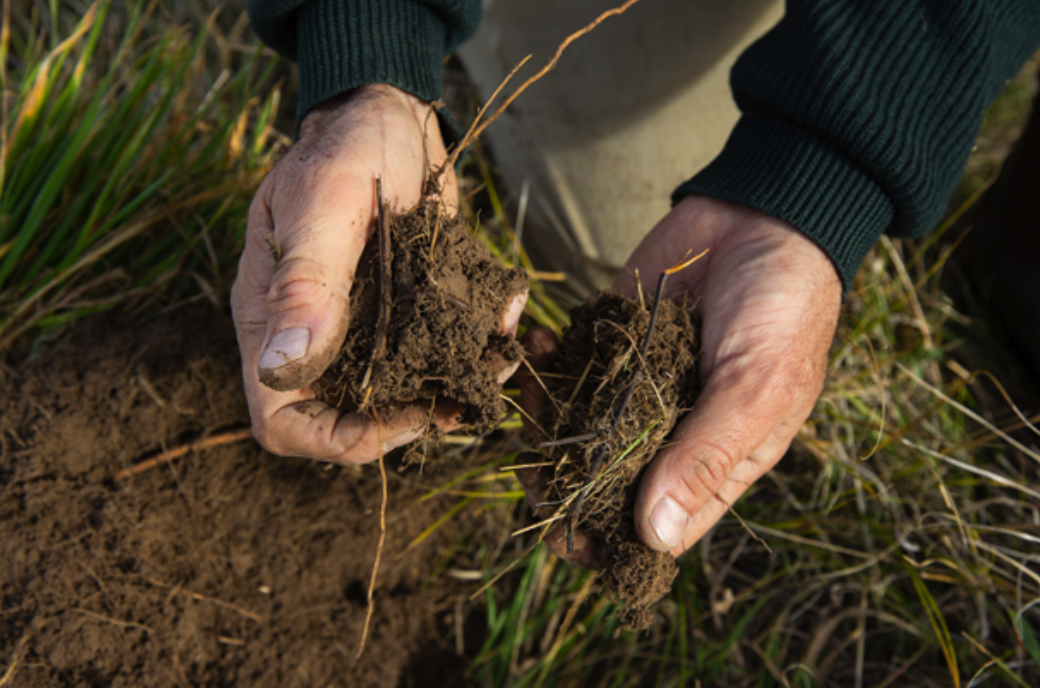
Model outputs are checked against field observations. The direct measurement and verification needed for an individual farm are matched to the intended use of the results.
What does a tower measure? A flux tower measures carbon exchange across the ecosystem. Estimating soil carbon stock change also requires modelling and other field information to account for carbon held in plants and moving through the system. TERN explains how flux towers work.
Does every farm need a tower? No. Flux uses a calibrated model that can be applied without a tower on every property. Soil data establish the starting point, and the sampling or other direct measurement needed depends on the site and the purpose of the work.
Published evidence
Three studies. Three parts of the picture.
Model performance, soil carbon storage and livestock methane are connected questions. Explore the findings and the scope of each study.
Model development
Testing the carbon model
7.4% nRMSESoil carbon stock estimates · 0–30 cm
Tested against field measurements across seven research sites in north-east Australia.
Stock estimates over two to four years; accuracy of annual change needs a separate assessment.
Peer-reviewed research
Takeda et al. (2025) · Soil Science Society of America Journal 89, e70003
Study details and limits
Researchers calibrated DayCent-CABBI using a long-term grazing trial, then refined and tested it using data from seven flux tower sites in north-east Australia.
For soil carbon stocks in the top 30 cm, the study reported a 7.4% normalised root mean square error (nRMSE) and an RMSE of 2.81 tonnes of carbon per hectare against soil measurements over two to four years.
The study also used the calibrated model to explore long-term soil carbon outcomes under time-controlled grazing and legume incorporation. These were modelled scenarios.
What this means: The paper supports the model-based approach under the study conditions. The 7.4% figure describes soil carbon stock estimates; it is not a universal error for annual stock change on every farm. Applicability and uncertainty need to be assessed for the property and data being used.
Soil carbon sequestration potential in subtropical grasslands estimated by DayCent-CABBI
Desmanthus & soil carbon
Building carbon with Desmanthus
0.47 t CPer hectare per year · annualised estimate
A comparison of 12 paired sites found more soil carbon under established Desmanthus stands.
Measured to 1 m; annualised over an average 16 years since establishment.
Peer-reviewed research
Rowlings et al. (2026) · Soil Research 64, SR25128
Study details and limits
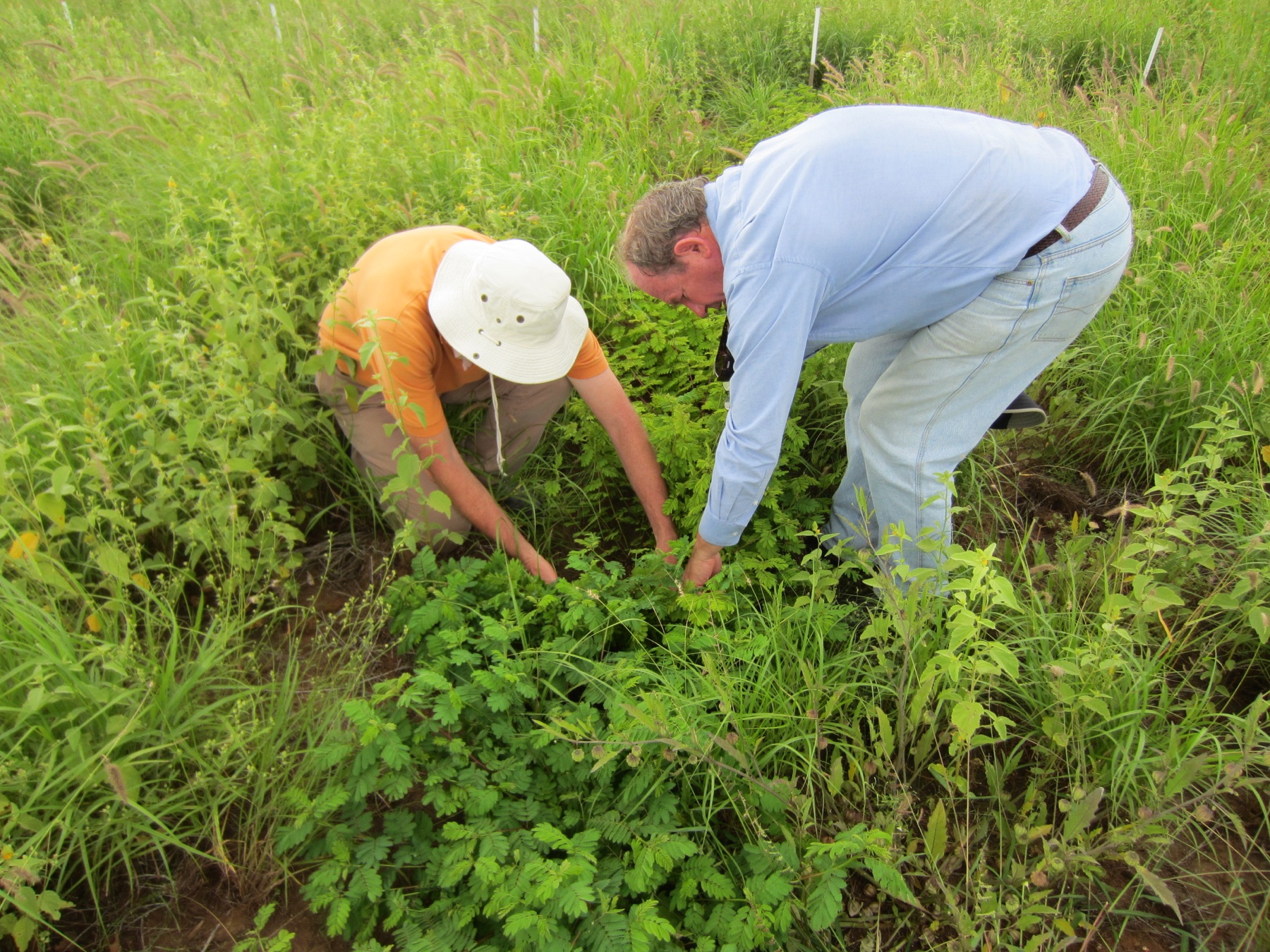
A QUT-led study compared 12 paired sites, measuring soil carbon to one metre under established Desmanthus pastures and comparable pastures without Desmanthus.
Desmanthus sites held an estimated 7.5 tonnes more carbon per hectare than controls. With an average of 16 years since establishment, this equated to an annualised estimate of 0.47 tonnes of carbon per hectare per year.
What this means: The findings support the soil carbon potential of established Desmanthus stands. This was a paired-site comparison, rather than annual monitoring over 16 years. Results depend on successful establishment and persistence, and gains are expected to slow as soils approach a new equilibrium.
Soil carbon sequestration under the tropical perennial legume Desmanthus in northern Australian grasslands
Livestock methane
Methane under grazing conditions
9% lowerWet-season methane intensity · per kg liveweight
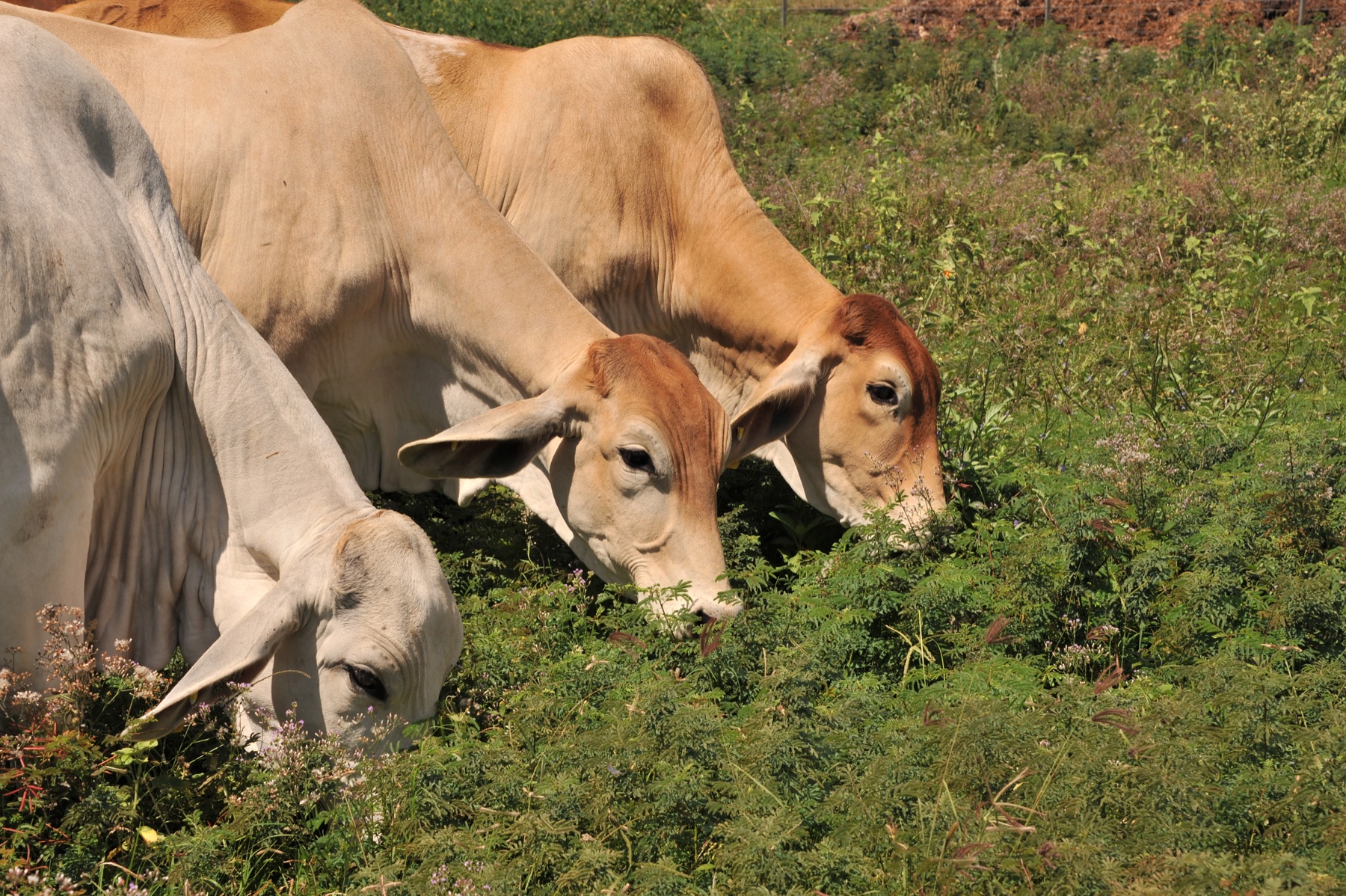
Cattle grazing buffel–Desmanthus had lower methane intensity in the wet seasons.
There was no treatment effect in the dry season during the 16-month study.
Peer-reviewed research
Charmley et al. (2025) · Animal Production Science 65, AN25329
Study details and limits
A CSIRO-led, 16-month commercial grazing study in central Queensland compared cattle on buffel grass with cattle on buffel–Desmanthus pastures.
In the wet seasons, cattle grazing buffel–Desmanthus had 8% lower methane yield per kilogram of dry matter intake and 9% lower methane intensity per kilogram of liveweight. There was no treatment effect in the dry season.
What this means: The study adds evidence about seasonal methane outcomes alongside pasture improvement. These methane findings address a different part of the farm carbon balance from soil carbon storage; they do not validate the Flux soil carbon model or establish a fixed annual emissions reduction.
A longitudinal study of methane emissions by cattle grazing buffel grass or buffel grass–Desmanthus pastures
Photos illustrate Agrimix’s field work and grazing systems.
Research in progress
Extending the approach to wool production.
Australian Wool Innovation is funding a two-year project delivered by Agrimix with Integrity Ag, Achill Station and LI-COR to test a Measure, Model, Verify approach in a commercial wool enterprise.
The project combines flux tower observations with soil, climate, pasture, livestock and management data. It aims to connect biogenic carbon flows with whole-farm emissions accounting, and test a pathway that could be applied across similar wool-growing properties.
The project is scheduled to conclude in early 2028.
Where does the published evidence apply? The model study featured above focuses on subtropical grasslands in north-east Australia. Work in additional regions and production systems extends that evidence base. The team can explain the calibration, data and verification relevant to your property.
Further reading
The wider science behind the approach.
These resources explain flux measurement and the use of ecosystem models in other settings. They provide background to the methods used in this field.
- TERN: What is an Eddy Covariance Flux Tower?
- Eugster & Merbold (2015). Eddy covariance for quantifying trace gas fluxes from soils. SOIL 1, 187–205.
- Chen et al. (2018). Comparing crop growth and carbon budgets simulated across AmeriFlux agricultural sites using the Community Land Model (CLM). Agricultural and Forest Meteorology 256–257, 315–333.
- Kirschbaum et al. (2015). Modelling carbon and water exchange of a grazed pasture in New Zealand constrained by eddy covariance measurements. Science of the Total Environment 512–513, 273–286.
- Kirschbaum et al. (2020). Combining eddy covariance measurements with process-based modelling to enhance understanding of carbon exchange rates of dairy pastures. Science of the Total Environment 745, 140917.
From evidence to application
Put the research to work on your farm.
See how Agrimix Flux connects to your bigger pasture performance picture, management decisions and soil carbon monitoring in practice.
Ready to see Flux in action?
Talk with our team about the model, the evidence and the data needed for your property or project.