The new Priorities for Low Emissions Agriculture report, led by Michael Battaglia and Peat Leith, is a significant cross-sector look at what it will take to turn science-backed abatement into practice on farm. It sets out five priorities for scaling: proof of profitability and ROI, stronger market incentives, practical technology stacking, de-risking the transition, and trusted extension and peer networks.
In the red meat and sheep appendix, tannin-rich pasture legumes such as Desmanthus are rated technically ready (TRL 8) but early on the commercial pathway (CRL 5). The report says broader adoption will need improved cultivars, clearer grazing guidelines and integration into existing pasture systems.
We agree with those needs, and they are what we have been working on for more than 15 years. Agrimix has been developing, sowing, grazing and measuring Desmanthus pastures with producers across Queensland, building the evidence base as we go. Below is where that work sits against each of the report’s five priorities, and what we are still working on.
1. Proof of profitability and ROI
On a commercial Central Queensland property, a legume-based improved pasture more than doubled beef per hectare over seven years. The pasture was sown in January 2019 to a mix of Progardes Desmanthus, Reclaimer Rhodes grass, Bambatsi panic and Caatinga stylo, and compared with an established buffel grass paddock from 2019 to 2026.
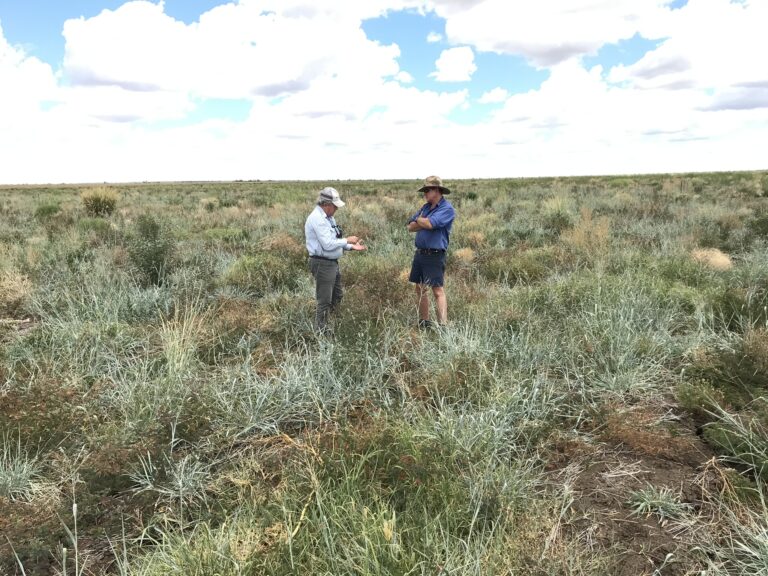
Bush AgriBusiness independently analysed the herd data, using the MLA intake method for northern Australia (McLennan, McLean and Paton 2020).
| Measure | Buffel | Improved pasture |
|---|---|---|
| Beef produced (kg liveweight/ha/yr) | 55 | 117 |
| Beef per adult equivalent (kg/AE/yr) | 144 | 163 |
| Feed conversion (kg DM eaten per kg liveweight) | 19.7 | 15.2 |
The extra 62 kg of liveweight per hectare is worth about $200/ha/yr in extra income, and the per-hectare difference is statistically significant (P < 0.05). Establishment cost $350/ha in 2019. On our numbers, that investment paid for itself in under two years.
This is one property over seven years, not a regional average. It does show what is possible where a legume pasture is well established, and it is the kind of long-term commercial data we want to build across more country.
The improved paddock was fertilised and had been cultivated before sowing, while the buffel paddock was not, so some of the gain comes from the whole package rather than the legume alone. Establishment costs have also risen since 2019. That is exactly why we work through the numbers property by property.
2. Stronger market incentives
Supply chains, lenders and carbon programs all ask for the same thing: credible data at paddock level. We measure and model production, methane and soil carbon on the same paddocks, so producers have it.
Our Agrimix Flux platform models soil carbon and pasture production paddock by paddock. It is calibrated against eddy covariance flux measurements and long-term soil datasets, and can be paired with on-farm flux towers and/or soil coring where a program needs direct measurement. That gives producers figures they can take to a processor’s insetting program, a lender’s sustainability questions or their own farm carbon account.
Incentives can’t do much for a practice nobody can quantify. The more paddocks we measure, the easier it becomes for markets to recognise what legume pastures deliver.
3. Practical technology stacking
Desmanthus delivers an emissions reduction and a carbon removal from the same plant, on top of the production gain. The report ranks stacking potential for these pastures as medium and calls them a foundational, system-level option. Our research to date suggests the stack can start inside the paddock itself.
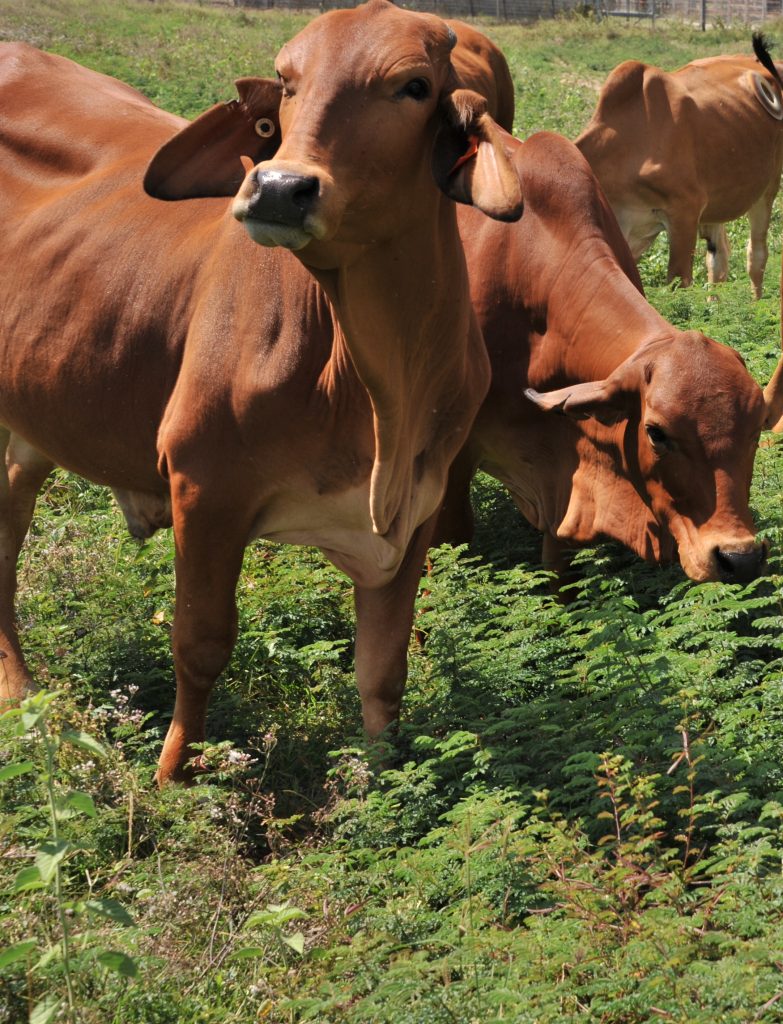
Methane. In a 16-month study with CSIRO on a commercial property in Central Queensland, 400 heifers grazed four 300 ha paddocks of buffel grass, with or without about 30% Desmanthus. In the wet seasons, when cattle were eating Desmanthus, methane yield fell by 8% and methane intensity by 9%. Desmanthus also increased carcase weight (Charmley et al. 2025). There was no difference in the dry season. The same trial data underpins the Charmley (2025) MLA review that the report draws on.
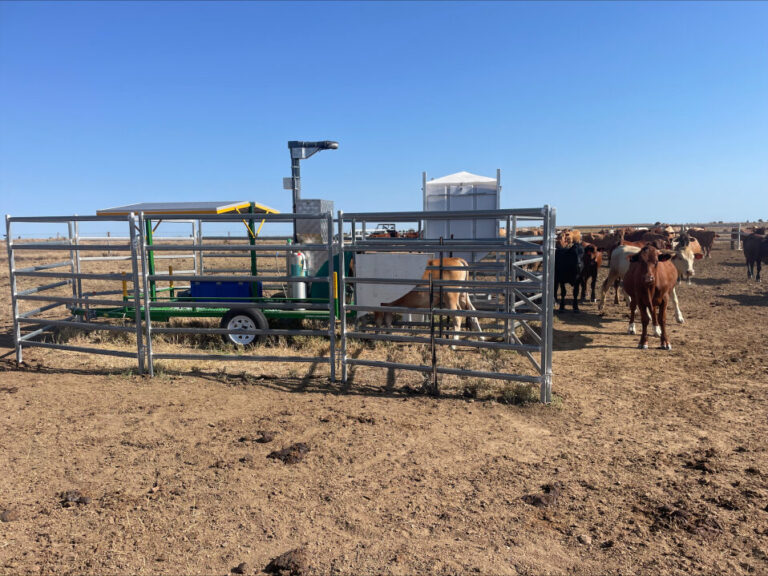
Soil carbon. In research we commissioned with QUT, the team sampled 12 pairs of paddocks across Queensland, with and without Desmanthus, cored to one metre. Desmanthus pastures held 7.5 t more soil carbon per hectare (P < 0.001), about 0.47 t C/ha/yr over an average of 16 years, with most of the gain in the first decade (Rowlings et al. 2026). The extra carbon sat below 10 cm, where it is more likely to stay. Seven of the 12 sites were Progardes stands.
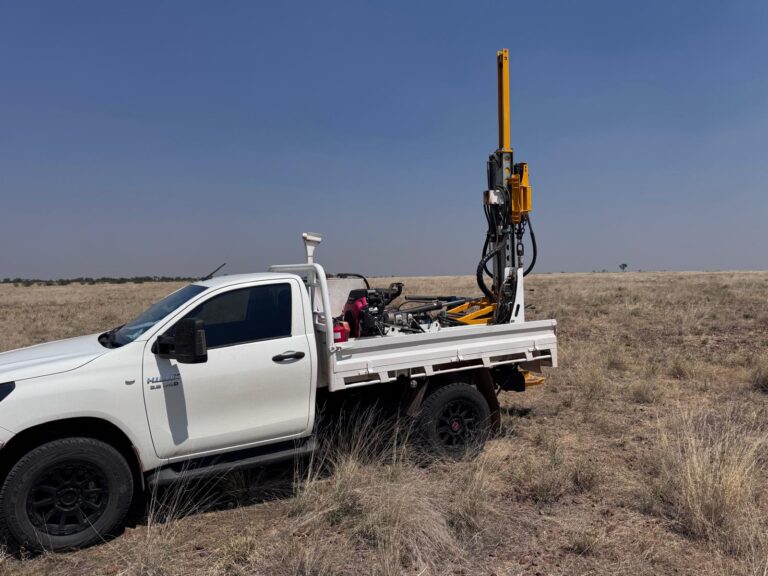
Production. Better diet quality and nitrogen fixation lift both the legume and the companion grasses, which is where the beef-per-hectare gains in section 1 come from.
Each study has its limits. The methane trial ran on one property over 16 months, and the soil carbon study compared paired paddocks rather than measuring the same paddocks over time. Together, though, they point the same way. Our job now is to link them up, with production, methane and soil carbon measured on the same paddocks across more country.
4. De-risking the transition
The report asks for improved cultivars and clearer grazing guidelines. Both have been part of our work for more than a decade, and both are still developing.
We developed and commercialised Progardes, a Desmanthus blend for northern clay soils, more than a decade ago (Gardiner et al. 2013). It is now in the ground across Queensland, and stands sown from 2011 onwards were part of the QUT soil carbon study. Progardes remains the core of our legume work, and we have new cultivars and species on the way to sit alongside it.
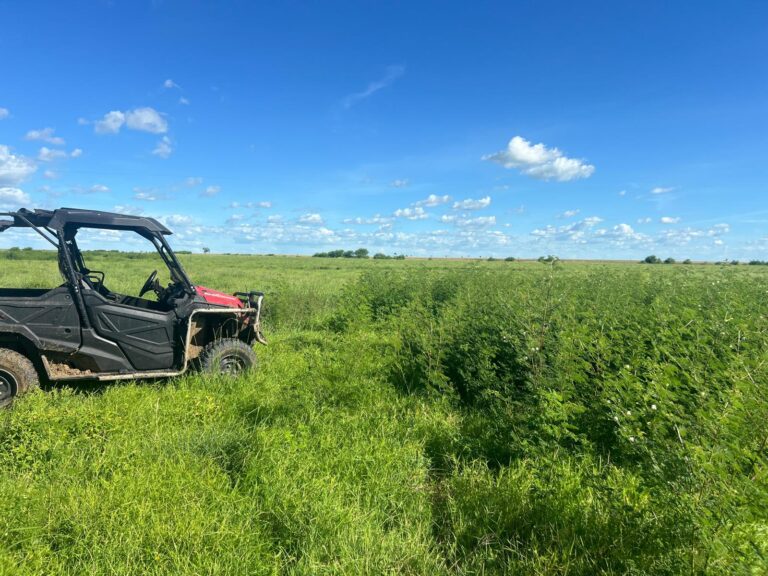
Establishment is where legume projects succeed or fail. The QUT paper names the barriers to adoption as poor establishment, seed cost, ongoing management and long-term persistence. Its answer is better seedbed preparation, effective weed control and tailored grazing management. That is the service we provide with every sowing:
- Paddock and soil assessment before sowing, so the right country gets the right mix
- A sowing plan covering seedbed preparation, weed control, inoculation and timing
- Follow-up checks through the establishment year
- Grazing guidelines for each paddock, so the legume persists and the gains last
5. Trusted extension and peer networks
Producers adopt what they see working on country like theirs, explained by people who have done it. Our agronomists have spent more than 15 years on Queensland properties, sowing, grazing and measuring legume pastures alongside the producers who run them.
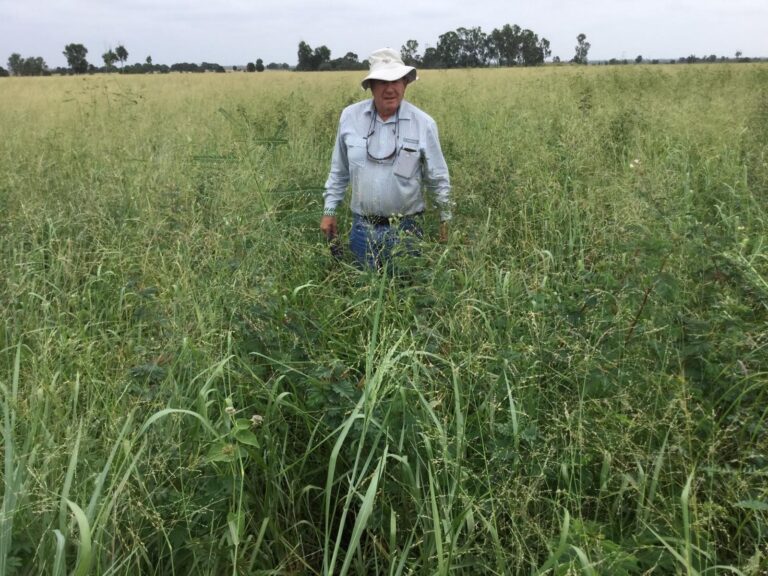
Most of the research behind this article was done on commercial properties, with managers and owners involved from the start. Pasture Portal, our free platform for graziers, puts the same knowledge in front of producers we haven’t met yet, with tools such as the Pasture Picker and Sowing Calculator.
Emissions and removals, side by side
As the report notes, better pasture usually lowers emissions per kilogram of beef, but total emissions per hectare can rise as productivity and carrying capacity go up. Our case study shows exactly that, which is why we report herd emissions and soil carbon side by side for every paddock.
| Per hectare per year | Buffel | Improved pasture |
|---|---|---|
| Herd emissions (kg CO₂e) | 488 | 852 |
| Modelled soil carbon change (kg CO₂e) | 859 | 2,059 |
Herd emissions are from the Bush AgriBusiness analysis (emissions intensity × beef produced) and exclude fertiliser, fuel and electricity. Soil carbon change is modelled with Agrimix Flux to 30 cm and converted from carbon to CO₂e. The two are reported next to each other, not netted against each other.
Where to from here
We agree with the report’s five priorities. For improved pastures, starting with Desmanthus, we are building the evidence base piece by piece: a commercial cultivar, peer-reviewed methane and soil carbon studies, and seven years of production data from a commercial property.
Our focus is linking that evidence together and turning it into practical tools and information for producers: what to sow, how to establish it, how to graze it, and what it is delivering on their place.
The next step is scale, and that will take the whole sector. Our Desmanthus work has been built in partnership from the start: methane research with CSIRO, soil carbon research with QUT, Agrimix Flux developed with MLA and QUT, and our trial data shared for MLA’s review of low-emissions pastures. We look forward to continuing that work with MLA, CSIRO, the Zero Net Emissions Agriculture CRC and our research partners.
Talk to us
If you’re considering a legume pasture, talk to our team about what it could deliver on your country, from establishment through to measuring the results.
References
- Charmley E (2025). A review of anti-methanogenic pastures and forages: prospectivity and adoptability. Final report B.PAS.0012. Meat & Livestock Australia, North Sydney. Link
- Charmley E, Bishop-Hurley G, Matthews M, Simington J, Stanford J, Gardiner C, Godson L, Geldof Z, Kempe N (2025). A longitudinal study of methane emissions by cattle grazing buffel grass or buffel grass–Desmanthus pastures. Animal Production Science 65, AN25329. doi:10.1071/AN25329
- Copley T, McLean I (2026). Agrimix – Progardes Trial. Bush AgriBusiness Pty Ltd.
- Gardiner C, Kempe N, Hannah I, McDonald J (2013). PROGARDES: a legume for tropical/subtropical semi-arid clay soils. Tropical Grasslands–Forrajes Tropicales 1(1), 78–80. doi:10.17138/TGFT(1)78-80
- McLennan S, McLean IA, Paton CJ (2020). Re-defining the animal unit equivalence (AE) for grazing ruminants. Meat & Livestock Australia, B.GBP.0036.
- Rowlings DW, Mitchell E, Bonner M, Gardiner C, Mirsafi Z, Takeda N, McEwan S, Grace P (2026). Soil carbon sequestration under the tropical perennial legume Desmanthus in northern Australian grasslands. Soil Research 64, SR25128. doi:10.1071/SR25128
- Priorities for Low Emissions Agricultural Solutions Investment, Appendix C.1: Red Meat and Sheep Sector Technology Assessment.