Lachlan Godson, Pasture Agronomist and Researcher, Agrimix
Around 6–10% of the gross energy cattle eat goes out as methane (Johnson & Johnson 1995). That’s feed you’ve paid for that never becomes beef.
Progardes® Desmanthus is a pasture legume that reduces that loss. Less methane per kilogram of feed means more of the feed goes into growth, which is why lower methane and better feed efficiency tend to show up together.
The numbers
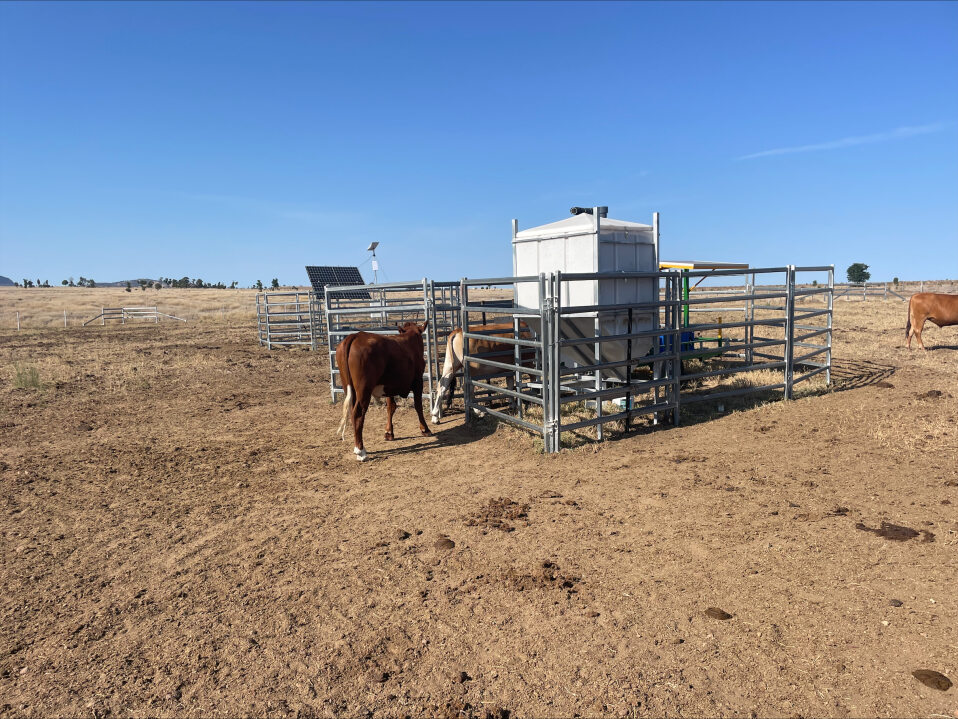
We ran the trial with CSIRO as our science partner on Cungelella, a Northern Australia Pastoral Company property in central Queensland. It was funded by the Department of Climate Change, Energy, the Environment and Water, with co-investment from Agrimix and CSIRO.
Over 16 months, 400 heifers grazed four 300 ha paddocks of buffel grass, with or without Progardes Desmanthus (Charmley et al. 2025). Here’s what we found:
- Methane yield was 8% lower and methane intensity 9% lower in the wet seasons, when Desmanthus made up 30–50% of what the cattle were eating.
- Hot carcase weight was 10 kg heavier (+5 kg per side), worth about $70/head at the grid. Final liveweight was 565 kg against 550 kg.
- Cattle grew faster while the legume was growing. In the first wet season they gained 1.08 kg/day, against 0.90 kg/day on buffel alone.
Across the whole trial, total methane per animal per day was only 3% lower, which is too small a difference to call. Desmanthus made its difference in efficiency: less methane for every kilogram of feed eaten and every kilogram of liveweight.
Respiration chamber work from our previous studies with CSIRO and James Cook University backs this up. Methane yield fell in a straight line as Desmanthus rose to 31% of the diet, and was about 10% lower at that level (Suybeng et al. 2020).
In short, the paddocks with Desmanthus produced less methane and heavier carcases. The lower methane shows less feed energy was lost, and the heavier carcases show where that energy went.
How Progardes does it
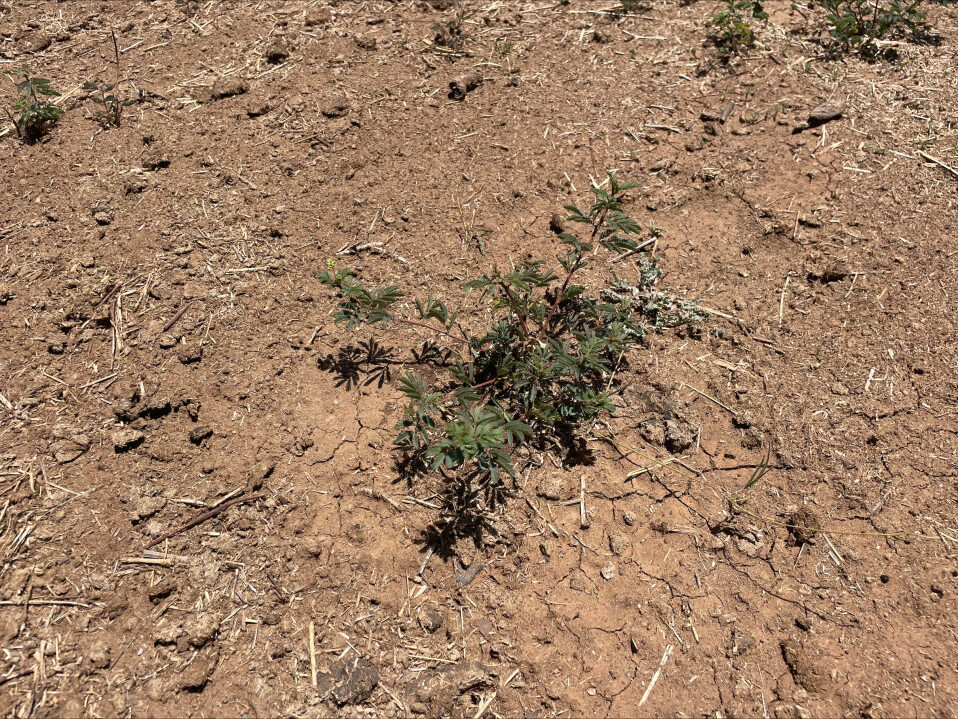
Tannins are the most likely reason. The three Progardes species carry 1.5–4.5% condensed tannins, plus hydrolysable tannins. In the lab, all three produced less methane than Rhodes grass, with D. bicornutus and D. leptophyllus producing up to 26–36% less per gram fermented (Vandermeulen et al. 2018).
In the rumen, the tannins bind to plant protein so microbes can’t break it down and waste it as ammonia. In the more acidic true stomach, that bond breaks and the protein is absorbed as normal. Tannins also knock back the methane-producing microbes.
The amount matters. Above about 5% condensed tannin, intake drops and the feed is harder to digest. Progardes sits below that level (Vandermeulen et al. 2018), with enough tannin to protect protein and reduce methane without holding back digestion.
So the lower methane comes from cattle making better use of their feed while still eating well. Better rumen turnover and a better energy supply than a grass-only diet also play a part (Charmley et al. 2025).
The take-home
The main reason to sow Progardes Desmanthus is the feed energy you’re currently losing as gas, which you’d rather have as beef. Lower methane comes along with it.
Our thanks to Dr Ed Charmley and the CSIRO team, who led the science, and to the Collins family and the Northern Australia Pastoral Company for hosting the trial at Cungelella.
We also funded research into whether Desmanthus builds soil carbon. Read the findings.
You can find our other published research, including earlier studies on Desmanthus and methane, on our research page.
References
- Charmley E, Bishop-Hurley G, Matthews M, Simington J, Stanford J, Gardiner C, Godson L, Geldof Z, Kempe N (2025). A longitudinal study of methane emissions by cattle grazing buffel grass or buffel grass–Desmanthus pastures. Animal Production Science 65, AN25329. doi:10.1071/AN25329
- Vandermeulen S, Singh S, Ramírez-Restrepo CA, Kinley RD, Gardiner CP, Holtum JAM, Hannah I, Bindelle J (2018). In vitro assessment of ruminal fermentation, digestibility and methane production of three species of Desmanthus for application in northern Australian grazing systems. Crop & Pasture Science 69, 797–807. doi:10.1071/CP17279
- Suybeng B, Charmley E, Gardiner CP, Malau-Aduli BS, Malau-Aduli AEO (2020). Supplementing northern Australian beef cattle with Desmanthus tropical legume reduces in-vivo methane emissions. Animals 10, 2097.
- Johnson KA, Johnson DE (1995). Methane emissions from cattle. J. Anim. Sci. 73, 2483–2492.